
Phakic intraocular ICL lens in Medellín
When laser is not an option, a lens inside the eye corrects your prescription without touching the cornea or removing your natural lens.
If you were told you are not a LASIK candidate because of your prescription or your cornea, a phakic lens may be the alternative. MDE Care is not a clinic: we connect you with refractive surgeons in Medellín and arrange your assessment, the surgery and the follow-ups.
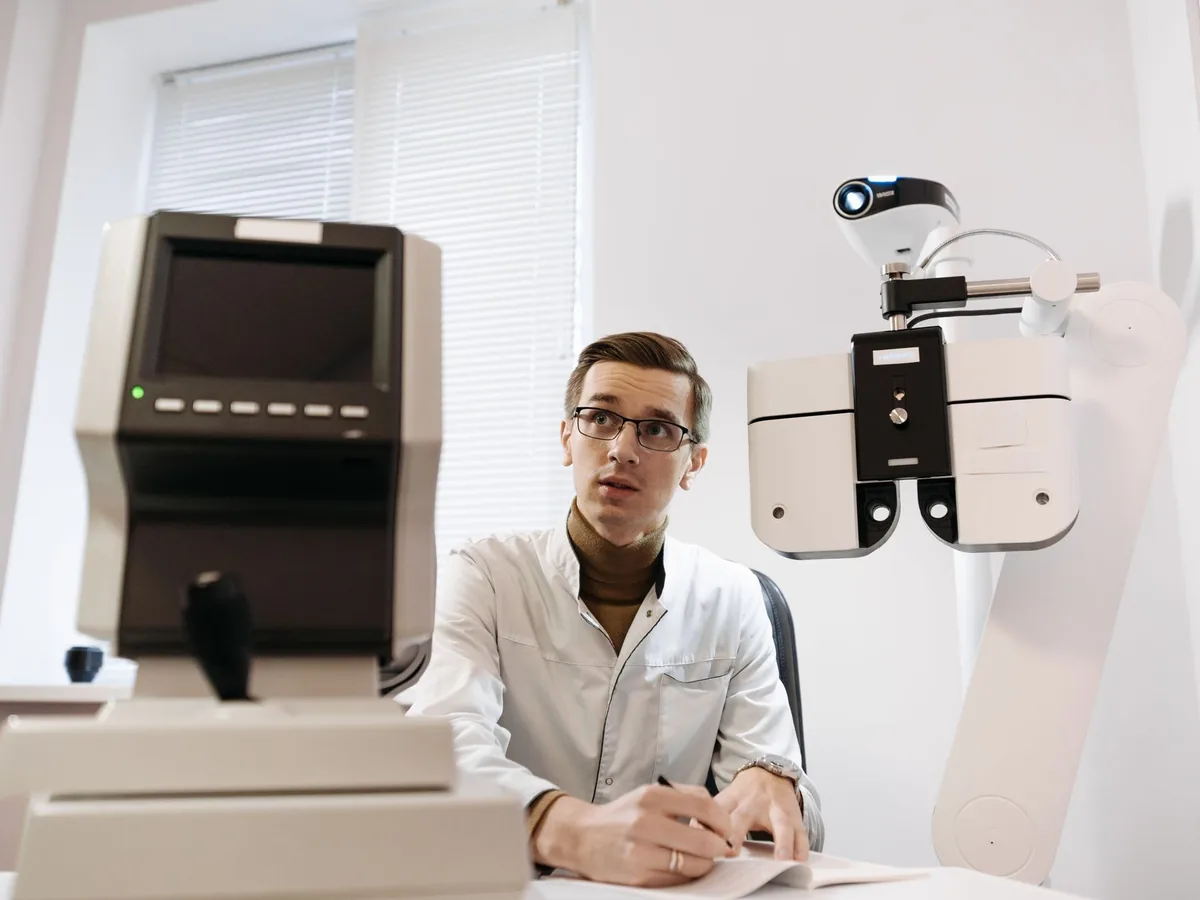
Your natural lens stays
the ICL sits in front of it
Is your prescription for laser or for an ICL lens?
Move the controls with the details of your prescription and we tell you which technique is most likely for your case, using the same criteria the refractive surgeon reviews.
It is the sphere number on your prescription (with a minus sign). If each eye is different, use the one with more nearsightedness.
2. What is your cornea like?
4. Check what applies
Laser likely
Laser likely: LASIK
With -6 diopters and a normal cornea, you are most likely a laser candidate: the MDE Care LASIK page indicates it for nearsightedness up to -10 to -12.
What the assessment decides on
- Anterior chamber depth: at least 3.0 mm
- Corneal endothelial cell count
- Corneal thickness and curvature
* Guidance only, not a diagnosis or a surgical recommendation. The surgeon decides the technique based on your tests. Thresholds used: FDA indication for the ICL from -3 to -15 diopters, with reduction up to -20, between ages 21 and 45 and an anterior chamber of at least 3.0 mm (EyeWiki, American Academy of Ophthalmology); phakic lens from about 6 diopters, with a thin cornea or dry eye (refractive clinic reference); LASIK up to -10 to -12 of nearsightedness (MDE Care LASIK page); presbyopia as the most common condition after 45 (MDE Care presbyopia page).
How much the ICL lens costs in Medellín
Choose the type of lens and how many eyes, and see a guide price in pesos or in dollars. The ICL price is given per eye.
1. Which lens do you need?
2. One eye or both?
Before the price, the assessment
Why the ICL starts with tests
The lens goes inside the eye, so your prescription is not enough: the surgeon has to measure whether there is room for it and whether your cornea is healthy. With those tests the surgeon confirms whether you are a candidate and which lens suits you.
- Anterior chamber depth of at least 3.0 mm
- Corneal endothelial cell count
- Corneal thickness and curvature
- Confirmation that your prescription is stable
Guide price · both eyes
COP 10,000,000 to COP 17,000,000
Spherical ICL · both eyes · COP 5,000,000 to COP 8,500,000 per eye
Guide price, confirmed at the assessment.
Pre-operative assessment with tests
COP 400,000
Not included in the estimate. Check it above to add it.
* Guide prices, confirmed at the assessment. Dollar amounts are a reference conversion and may change with the exchange rate of the day. The final price is set by the surgeon after your tests and according to the lens that suits you.
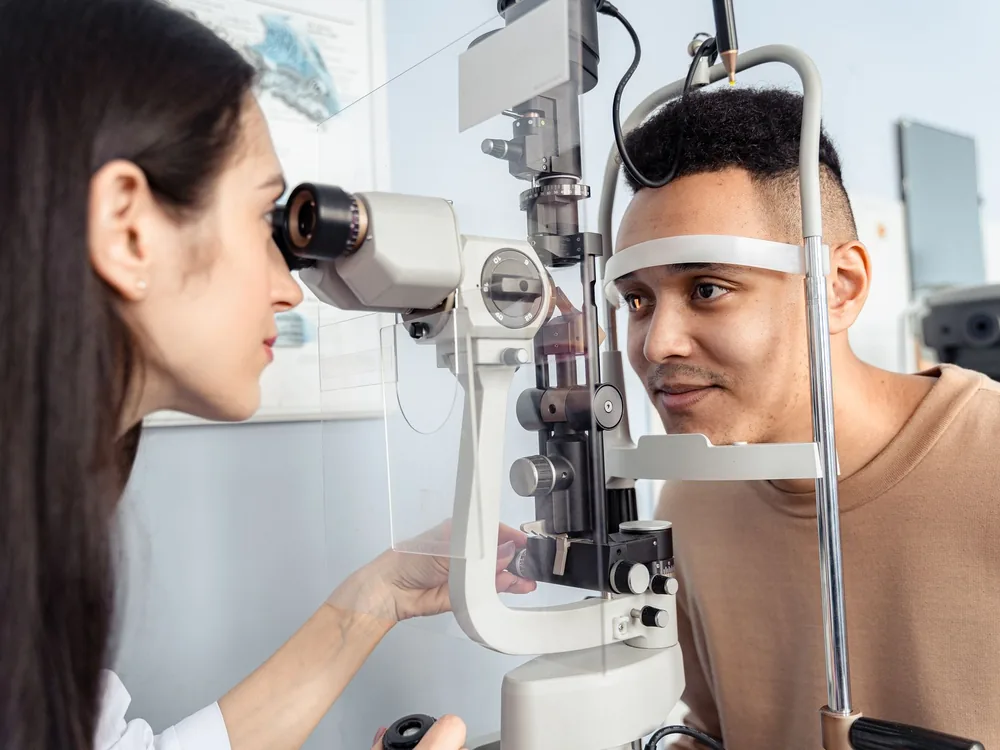
What the phakic ICL lens is
A phakic lens is a clear lens implanted inside the eye without removing the natural lens. The ICL is placed between the iris and the natural lens; other models sit in front of the iris. It is used for high prescriptions or when laser surgery on the cornea is not advisable.
The surgeon decides whether you are a candidate based on internal measurements of the eye, such as the depth of the anterior chamber and the endothelial cells, and on the stability of your prescription.
It is not cataract surgery
Your natural lens is not removed either. In cataract surgery the natural lens is replaced; with the ICL it stays in place and the implant can be removed, an advantage over lens replacement.
Types of phakic lens
They all correct your prescription from inside the eye. What changes is where the lens sits and what it corrects.
Posterior chamber ICL
A collamer lens placed behind the iris and in front of the natural lens.
Toric ICL
Corrects astigmatism in addition to nearsightedness.
ICL with a central port (EVO)
It has a 0.36 mm hole that avoids the small laser opening in the iris that earlier models needed.
Iris-fixated lens
It is attached to the iris and sits between the cornea and the iris.
Who is a candidate for the ICL lens
These are the criteria reviewed at the assessment.
High nearsightedness
The FDA approves the ICL for nearsightedness from -3 to -15 diopters, with reduction up to -20. It is usually considered from about 6 diopters.
Thin or irregular cornea
When the cornea does not allow laser surgery.
Between 21 and 45 years old
With a stable prescription. It is the age range of the FDA indication.
Dry eye that makes laser inadvisable
The lens does not act on the surface of the cornea.
Suitable anatomy
An anterior chamber of at least 3.0 mm and healthy cells in the inner layer of the cornea.
It is not always the only option
With moderate prescriptions and enough cornea, PRK or SMILE surgery or LASIK may work. After age 45, presbyopia surgery may be the better fit.
How the ICL lens is implanted
It is an outpatient surgery that starts long before you enter the operating room, with the measurements.
Prior tests. Corneal thickness and curvature are measured, along with the depth of the anterior chamber, which must be at least 3.0 mm, and the endothelial cell count.
Anaesthesia. With numbing drops, sometimes supplemented with additional anaesthesia inside or around the eye.
Implant. The folded lens goes in through an incision of about 3 mm in the cornea and unfolds between the iris and the natural lens.
Duration. The surgery takes about 15 to 20 minutes per eye. Whether both eyes are treated on the same day or on different days is decided by the surgeon.
If your prescription and your cornea allow it, laser is also an option: see LASIK refractive surgery.
What the ICL lens changes and what it does not
What does change
- It corrects high prescriptions without reshaping the cornea.
- It is reversible: the lens can be removed or replaced.
- You keep your natural lens.
What does not change, and the risks
- It does not prevent presbyopia or age-related cataracts: the natural lens keeps aging.
- It carries the risks of any surgery inside the eye; the ones monitored most closely are cataracts and raised eye pressure.
- In the trials that led to its FDA approval, clouding of the natural lens appeared in 0.4 to 1% of cases; with central port models, no cataracts affecting vision were reported.
- It carries more risk than laser, although it is considered a very safe surgery.
ICL lens at a glance
Hospital stay
No. It is outpatient
Anaesthesia
Local with drops, sometimes supplemented
Visual recovery
Improves within 24 to 48 hours
Eye drops
For 2 to 3 weeks
First follow-up
The next day: eye pressure and lens position
Remote follow-ups
When the specialist considers it safe
Later follow-ups can be done remotely when the specialist considers it safe, so you do not have to stay in Medellín longer than necessary.
Why arrange your ICL lens with MDE Care
We are not a clinic: we are your coordination team. We connect you with refractive surgeons in Medellín and support you from start to finish.
Refractive surgeons
We connect you with specialists who perform both laser and intraocular lens surgery, so the technique is decided by your tests and not by what a single practice offers.
Clear pricing before you travel
We give you a guide range from the first message and the final price after the assessment, in pesos or in dollars.
Coordination of the whole process
Assessment, surgery, next day follow-up and remote follow-ups when the specialist considers it safe.
Organizations that endorse our work


How we arrange your ICL lens in Medellín
A clear process with support at every step, from your first message to your follow-ups.
Send us your prescription
On WhatsApp, with your prescription and whatever you have been told about your cornea. We guide you on the technique and the price range.
Assessment with tests
We book the appointment in Medellín to measure your anterior chamber, your cornea and your endothelial cells.
Plan and final price
With the results, the surgeon chooses the lens and we give you the final price before booking.
Outpatient surgery
With numbing drops and no hospital stay. You go home the same day.
Follow-ups
A check the next day and, after that, remote follow-ups when the specialist considers it safe.
Everything about the ICL lens in Medellín
Which is better, ICL or LASIK?+
Both can achieve vision very close to 20/20. ICL is preferred for high myopia or thin corneas; the laser carries less risk when you are a good candidate. The surgeon makes the final decision based on your tests.
Can the ICL lens be removed?+
Yes, it is reversible: the lens can be removed or exchanged. That is one of its advantages over lens replacement surgery, in which the natural lens is replaced.
How many diopters does ICL correct?+
The FDA indication covers myopia from -3 to -15 diopters, with reduction up to -20. The toric model also corrects astigmatism.
What are the risks of the ICL lens?+
Because it is surgery inside the eye, there is a risk of cataract and of increased eye pressure; that is why measurements are taken beforehand and follow-ups are done afterwards. In the trials that led to its FDA approval, lens opacity appeared in 0.4 to 1% of cases.
Up to what age can the ICL lens be implanted?+
The FDA indication is from 21 to 45 years. After that age another strategy is usually better, because presbyopia sets in.
How much does the ICL lens cost in Medellín?+
As a market reference in Colombia, the phakic intraocular lens costs COP 5,000,000 to 10,500,000 per eye (about USD 1,250 to 2,625), with the toric model at the upper end of the range. The pre-surgical assessment with tests is around COP 400,000. These are guide prices: the exact price is confirmed at the assessment.
Are both eyes operated on the same day?+
The surgeon decides case by case, and MDE Care confirms it with the patient when coordinating the surgery, before flights are booked.
Were you told you are not a laser candidate?
Send us your prescription and your tests, and we will tell you whether the ICL could be your option.
Other ophthalmology procedures
Ready to find out if the ICL lens is for you?
Write to us with your prescription. We arrange your assessment with a refractive surgeon in Medellín, give you the final price after your tests and support you through your follow-ups.