
Gastric bypass in Medellín
From COP 26,000,000, performed laparoscopically with about one day in the hospital
Roux-en-Y gastric bypass creates a small stomach pouch of about 30 milliliters and connects it directly to the small intestine. It is usually the preferred technique for uncontrolled type 2 diabetes, severe reflux or a BMI above 50. At MDE Care we give you the full cost before you decide, connect you with a board-certified bariatric surgeon and coordinate your assessment, your tests and, if you are traveling, your stay in Medellín.
2 to 3 h
of surgery
~1 day
in the hospital
2 to 3 wk
to return to desk work
75 to 85%
of excess weight

Save up to 75%
compared with the United States
How much does gastric bypass cost in Medellín?
Tell us where you are coming from and we will show you the cost of your full process, including a recovery stay if you need one, and how much you save compared with having surgery in the United States.
Where are you coming from?
The surgery cost includes
- Laparoscopic surgery
- General anesthesia
- About one day in the hospital
- Post-operative follow-up visits
Your quote
Gastric bypass, estimated cost
From
COP 26,000,000
Not included
COP 150,000 to COP 300,000
Assessment consultation with the bariatric surgeon.
Surgery alone, compared with the United States
Save up to 75%
* Estimated costs. The final quote is provided after the assessment, based on your case and your tests. It does not replace the judgment of the bariatric surgeon.
Gastric sleeve or bypass for your case?
These are the factors the bariatric surgeon reviews to choose between the two techniques. Answer yes or no and we will show you which way the decision usually leans, with the figures for each one.
Do you have severe reflux?
Do you have type 2 diabetes that is not under control?
Is your BMI above 50?
For example, 5 ft 5 in and over 300 lb (1.65 m and over 136 kg). Not sure? Calculate it with the guide.
Have you had a gastric sleeve and regained weight?
Are you willing to take supplements for life?
Do you often take anti-inflammatory drugs, such as ibuprofen or naproxen?
Your guidance
0 of 6 answered
Answer all six questions
In the meantime, compare the two techniques side by side.
Gastric bypass
From COP 26,000,000
- Type 2 diabetes remission
- 60 to 80%
- Reflux
- Improves in most
- Excess weight loss
- 75 to 85%
- Supplements
- For life
Gastric sleeve
From COP 23,000,000
- Type 2 diabetes remission
- 40 to 55%
- Reflux
- May get worse
- Excess weight loss
- 60 to 70%
- Supplements
- Fewer
General guidance based on the published reference criteria and averages for this surgery. It does not replace the judgment of the bariatric surgeon: the technique is decided at your assessment, with your medical history and your tests.
What gastric bypass is and how it works
In a Roux-en-Y gastric bypass, the surgeon separates the upper part of the stomach and forms a pouch of about 30 milliliters. That pouch is connected directly to the small intestine, so food no longer passes through the rest of the stomach, the duodenum or part of the jejunum.
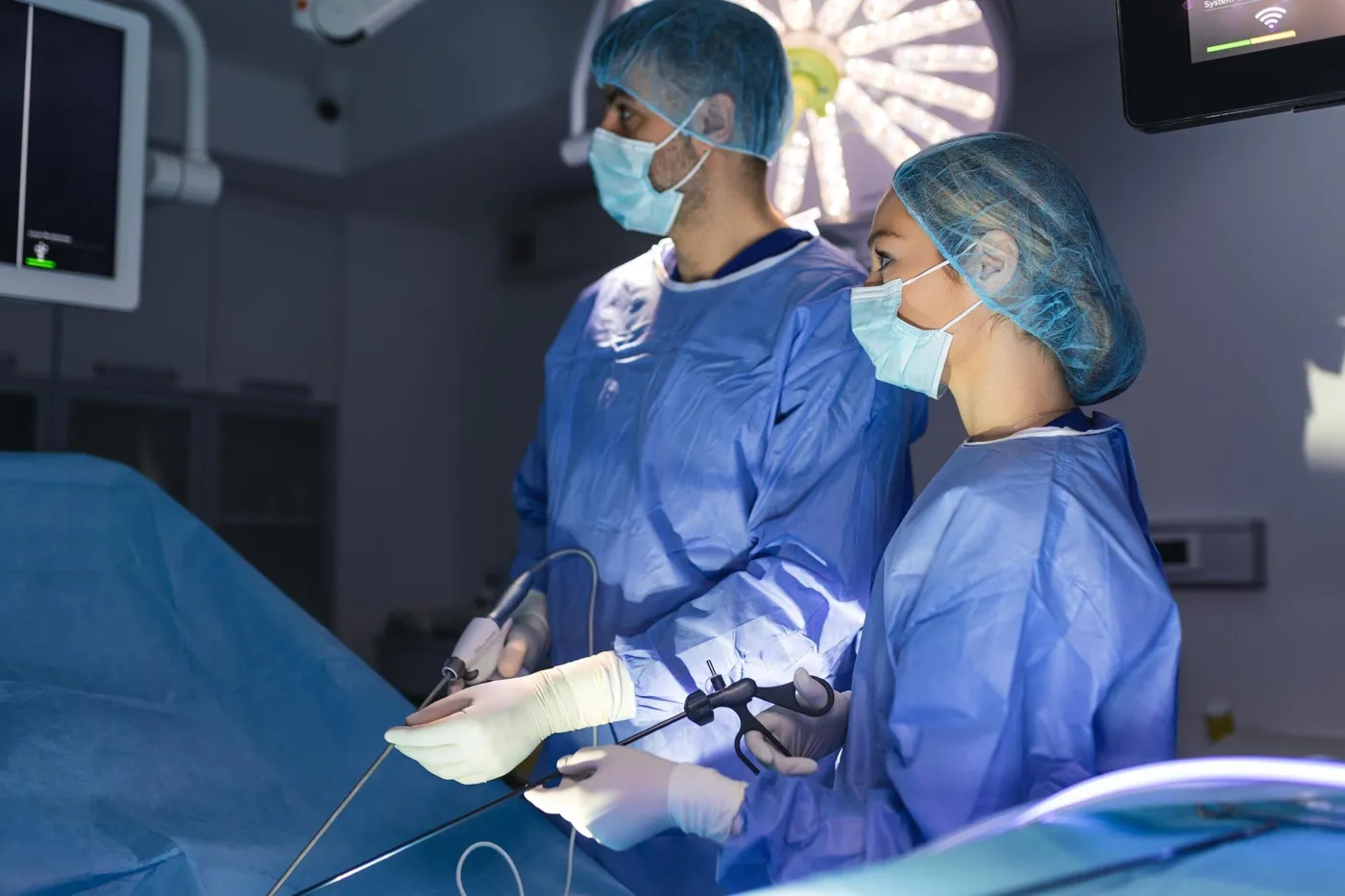
It is performed laparoscopically, under general anesthesia, and takes 2 to 3 hours. The hospital stay is about one day. It is a more complex surgery than the sleeve, with a greater effect on diabetes and reflux, and it requires supplements for life.
Restriction
The pouch of about 30 ml makes you feel full with very small portions.
Selective malabsorption
Because the duodenum and part of the jejunum are bypassed, part of what you eat is absorbed less. That is why supplements are needed for life.
Hormonal effect
Ghrelin, the hunger hormone, goes down, while GLP-1 and PYY, two gut hormones, go up. Insulin sensitivity improves independently of weight loss, which explains its effect on diabetes.
How much weight you lose with bypass, month by month
Average percentage of excess weight lost. If you have 50 kilos of excess weight, after two years you could lose an average of 37.5 to 42.5 kilos.
3 months
20 to 30%
Sleeve: 15 to 25%
6 months
50 to 60%
Sleeve: 40 to 50%
12 months
70 to 80%
Sleeve: 55 to 65%
2 years
75 to 85%
Sleeve: 60 to 70%, at 18 to 24 months
Published reference averages for this surgery. Each patient’s result depends on adherence to the diet, physical activity, supplements and follow-up care. It is not a guaranteed result.
Conditions that improve with gastric bypass
Percentage of patients with remission or improvement, based on the published reference results for this surgery. The lighter bar shows the result of the sleeve, for comparison.
Type 2 diabetes
60 to 80%
remission with bypass
Sleeve: 40 to 55%
High blood pressure
65 to 75%
improvement with bypass
Sleeve: 60 to 70%
Sleep apnea
80 to 85%
improvement with bypass
Sleeve: 75 to 80%
High cholesterol
70 to 80%
improvement with bypass
Sleeve: 65 to 75%
Knee osteoarthritis
60 to 70%
improvement with bypass
Sleeve: 55 to 65%
Gastroesophageal reflux
Improves
In most patients with bypass. With a sleeve, its course varies and it can get worse.
Who is a candidate for gastric bypass?
First, the bariatric surgery criteria of the IFSO, the international federation of the specialty, must be met. Then, some cases tip the choice toward bypass.
General criteria
- BMI of 40 or higher.
- BMI of 35 or higher with type 2 diabetes, high blood pressure, sleep apnea or another related condition.
- BMI of 30 to 35 with significant metabolic conditions, evaluated case by case.
- Previous weight loss attempts without lasting results.
- Commitment to medical and nutritional follow-up.
Bypass is usually preferred with
- Uncontrolled type 2 diabetes.
- Severe reflux.
- BMI above 50.
- A previous sleeve with weight regain.
- Several related conditions at once.
With controlled diabetes, the sleeve is still an option.
May rule out surgery
- An active eating disorder.
- An uncontrolled psychiatric condition.
- Active use of alcohol or other substances.
- Inability to keep up with follow-up care.
Not sure whether you are a candidate? Use the bariatric surgery guide.
Preparation, recovery and diet
Pre-surgery diet
For 2 to 4 weeks, low in calories and high in protein, to reduce fatty liver by 20 to 30%.
Medications
Blood thinners, anti-inflammatory drugs and some diabetes medications are stopped, as directed by the team.
Smoking
You must quit 6 to 8 weeks before surgery. Besides raising the risk of a leak, after bypass it promotes marginal ulcers.
The five diet stages
Days 1 to 7
Clear liquids
Weeks 2 and 3
Full liquids
Weeks 4 to 6
Purées
Weeks 7 to 10
Soft, well-chewed foods
From week 11
Adapted regular diet
Three rules for life
Protein first
60 to 80 g per day.
No liquids with meals
Wait 30 minutes before and after.
No NSAIDs, ever again
Ibuprofen, naproxen and similar drugs are off-limits for life, because of the risk of a marginal ulcer.
When you can return to your activities
- Desk work and driving2 to 3 weeks
- Aerobic exercise4 to 6 weeks
- Gym and weights6 to 8 weeks
That is one more week of recovery than with a sleeve, because the surgery is more complex.
Alcohol
It should be avoided for the first year: after bypass it is absorbed faster.
Lifelong supplements after bypass
RequiredBecause part of the intestine no longer receives food, the body absorbs less of some vitamins and minerals. These are the reference supplements; the team adjusts the doses based on your follow-up lab results.
| Supplement | Reference dose |
|---|---|
| Multivitamin | Twice a day |
| Calcium citrate | 1,200 to 1,500 mg per day |
| Vitamin D | 3,000 IU per day |
| Iron | 45 to 60 mg per day |
| Vitamin B12 | 350 to 500 mcg sublingual per day, or 1,000 mcg intramuscular per month |
| Folic acid | 400 to 800 mcg per day |
| Thiamine (vitamin B1) | 12 mg per day |
| Zinc | 8 to 11 mg per day |
Risks of gastric bypass
Like any surgery, bypass has risks. In experienced centers they are uncommon, and the surgeon reviews them with you at your assessment. Follow-up care and supplements are there to prevent late complications.
First days
Leak at the connection
In fewer than 2% of cases at expert centers.
First days
Bleeding, blood clots, infection or obstruction
Risks inherent to abdominal surgery, which the team monitors during the hospital stay and the first follow-up visits.
Long term
Dumping syndrome and post-meal hypoglycemia
Discomfort or low blood sugar after meals. They are monitored at follow-up visits with the surgeon and the nutrition team.
Long term
Marginal ulcer
It is associated with anti-inflammatory drugs (NSAIDs), smoking and the H. pylori bacterium. That is why NSAIDs are off-limits for life.
Long term
Nutritional deficiencies
They are prevented with lifelong supplements and follow-up lab tests.
Long term
Weight regain
It can happen if healthy habits are abandoned. Follow-up with the surgeon and the nutrition team is part of the treatment.
0.1 to 0.3%
is the published reference mortality rate for gastric bypass.
Your gastric bypass in Medellín, step by step
The recommended stay is 5 to 7 days, one more than for a sleeve. Much of the preparation, from the initial assessment to the quote, is handled remotely.
Step 1
Contact us on WhatsApp
Tell us about your case, your height and your weight.
Step 2
Video call with the surgeon
Initial assessment without traveling.
Step 3
Pre-surgery tests
Lab work, electrocardiogram, endoscopy and anesthesia assessment.
Step 4
Quote in US dollars
With a breakdown of what is included.
Step 6
Telehealth follow-up
Follow-up visits at months 1, 3, 6 and 12.
About gastric bypass in Medellín
How much does gastric bypass cost in Medellín?
How much weight do you lose with gastric bypass?
Is gastric bypass reversible?
Can I drink alcohol after gastric bypass?
Does gastric bypass cure diabetes?
How many days in the hospital does it require, and when can I return to work?
What is the difference between gastric bypass and a gastric sleeve?
How long should I stay in Medellín if I am coming from another country?
Not sure whether you are a candidate for surgery?
The bariatric surgery guide calculates your BMI and compares your case with every option, with and without surgery.
Other bariatric surgery options
Request your gastric bypass quote in Medellín
Tell us your height, your weight and where you are traveling from. We will send you the full cost of your process and coordinate your assessment with the bariatric surgeon.