
Uveitis in Medellín: diagnosis and treatment
A red eye that does not get better may be inflammation inside the eye. Treating it in time protects your vision.
Uveitis is inflammation of the middle layer of the eye. Often it is not just an eye problem: it can be the first sign of an autoimmune disease or an infection. MDE Care is not a clinic: we arrange your assessment with uveitis specialists in Medellín to find the cause, control the inflammation and prevent complications.
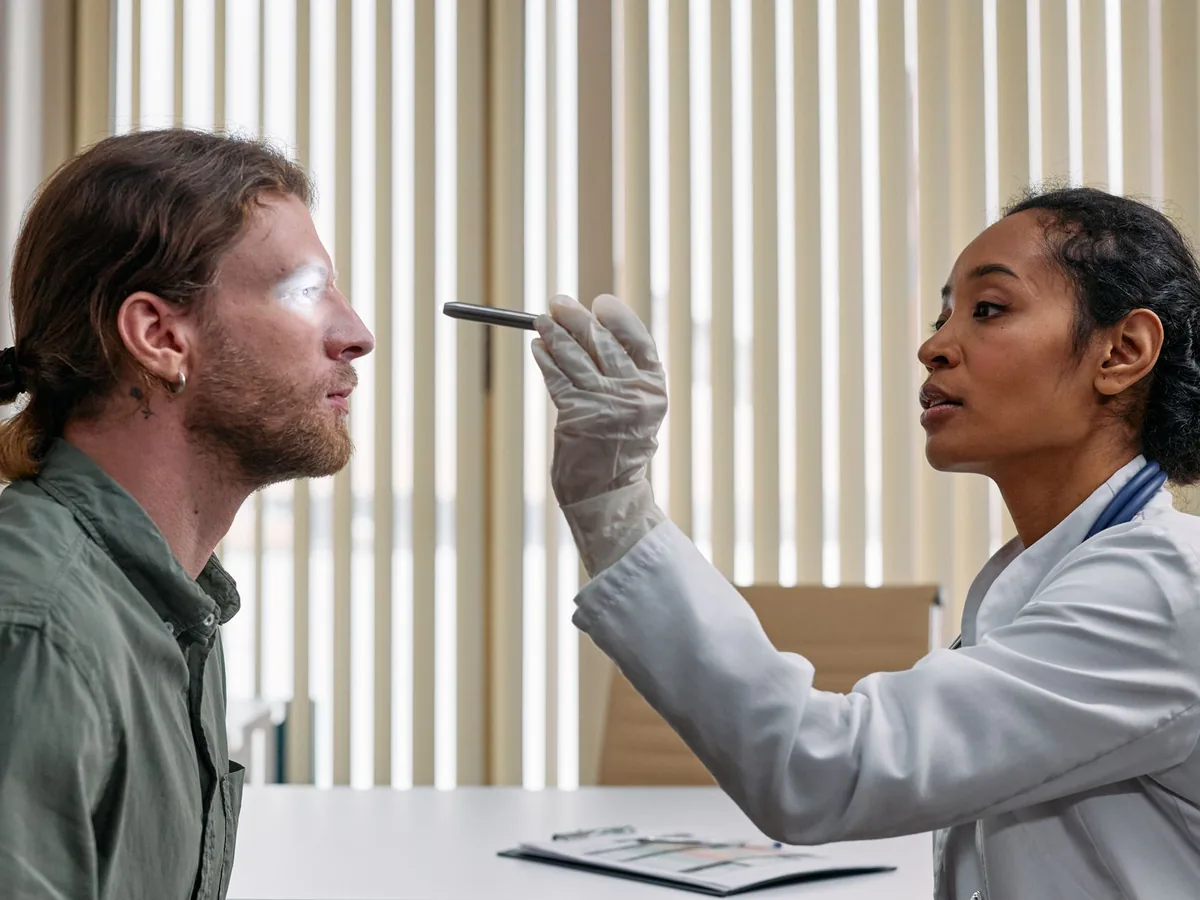
Treating the inflammation and its cause
anterior, intermediate, posterior and panuveitis
Uveitis symptoms: how urgently to be seen
Answer five questions. We tell you how soon the assessment should happen, which type of consultation and tests usually apply and how much the next step costs. It does not replace an eye exam.
1What are you noticing the most?
2Has your vision changed?
3Have you had similar episodes before?
4Do you have any of these conditions?
Check all that apply. If none apply, leave them unchecked.
5Does it affect one eye or both?
Assessment within the next 24 hours
You selected: red, painful eye that is sensitive to light, vision has not changed. A red, painful eye that is sensitive to light, without discharge, should be checked soon to tell anterior uveitis apart from other causes of red eye. If your vision starts to blur, go to the emergency room that same day.
Next step
- Consultation with a uveitis specialist
- Slit lamp exam and eye pressure check
- Close follow-up if you start drops
What the specialist usually checks
- Visual acuity and eye pressure
- Slit lamp exam and dilated exam of the back of the eye
Consultation with a uveitis specialist, estimated price
COP 250,000to COP 320,000
Slit lamp exam, eye pressure and dilated exam of the back of the eye. Tests are charged separately.
* Guidance only, this is not a diagnosis. Prices are estimates and are confirmed at the assessment. If you have severe pain or vision loss, go to the emergency room today.
How much does uveitis treatment cost in Medellín?
Build your case: the consultation with the uveitis specialist, the tests to see the inflammation and find the cause, local treatment and follow-up visits. We show you the estimated total in Colombian pesos or US dollars.
First, the assessment
Everything starts with the consultation with the uveitis specialist. They examine the eye with the pupil dilated, measure the pressure, define the type of uveitis and decide which tests are needed to find the cause before prescribing treatment.
What is included
- Consultation with the uveitis specialist
- Slit lamp exam, eye pressure and dilated exam of the back of the eye
- Written plan and prescription for the drops
What changes the price
- The type of uveitis and how intense the inflammation is
- How many follow-up visits the specialist recommends
- The assigned clinic and specialist
1. Consultation with a uveitis specialist
2. Tests the specialist orders
3. Local treatment, if the specialist prescribes it
Injections inside the eye are given the same way as intravitreal injections. The specialist decides how many are needed.
4. Follow-up visits
At first they are usually frequent, to monitor the inflammation and the eye pressure. The specialist sets the frequency.
5. If the uveitis is chronic or recurrent
Estimated total
COP 250,000to COP 320,000
Consultation with a uveitis specialist · drops
Breakdown
- Consultation with a uveitis specialistCOP 250,000 to COP 320,000
- Steroid and dilating dropsWith a prescription, at the pharmacy
* Prices are estimates and are confirmed at the assessment. Drops are bought at the pharmacy with a prescription. Guidance only, this is not a diagnosis.
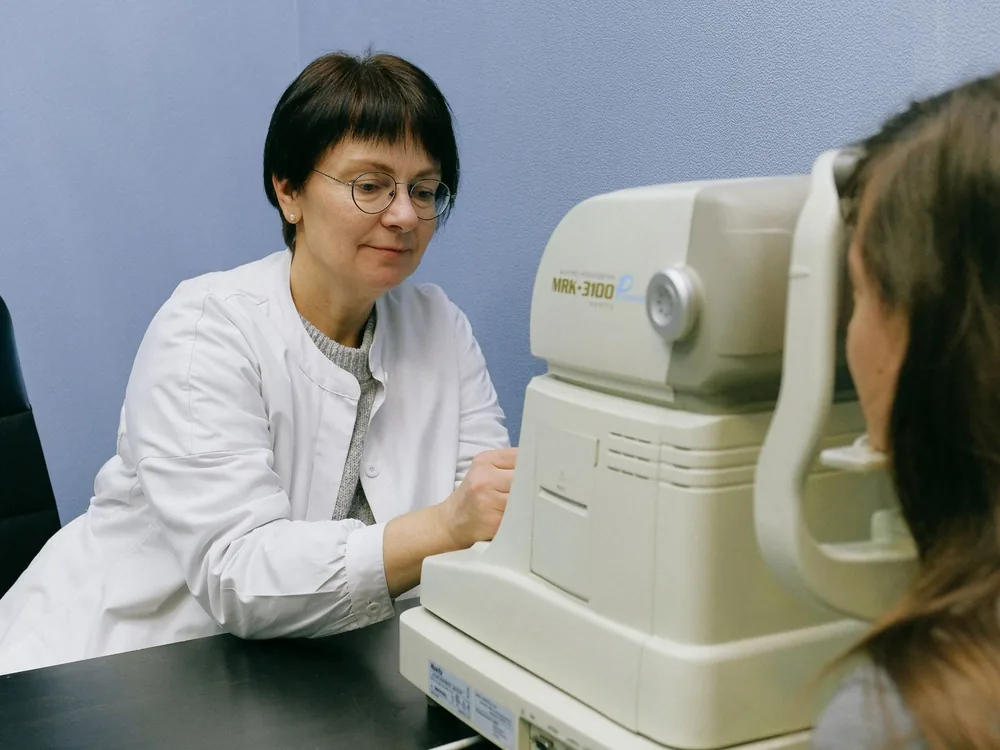
What is uveitis
It is inflammation of the uvea, the middle layer of the eye, made up of the iris, the ciliary body and the choroid. It can affect one or both eyes and can have an infectious or a non-infectious origin. It is most common between the ages of 20 and 60, and smoking increases the risk.
It is not conjunctivitis and it is not contagious, although the infection that causes it can be transmitted. And it does not always hurt: sometimes it appears silently, with only blurred vision or floaters.
That is why the assessment looks for two things: controlling the inflammation and finding the cause.
Types of uveitis
Anterior uveitis or iritis
Inflammation of the iris and the ciliary body. It is the most common type and usually causes a red eye, pain and light sensitivity.
Intermediate uveitis or pars planitis
Affects the ciliary body and the pars plana. It shows up mainly as floaters and blurred vision, often without pain.
Posterior uveitis
Affects the choroid and the retina. It can compromise central vision, which is why it is monitored with OCT and angiography.
Panuveitis
Involves all layers of the uvea. It is the most severe form and usually requires longer treatment.
Why uveitis happens
Uveitis is often not just about the eye. That is why the specialist asks about your whole body and, when needed, works with rheumatology or internal medicine.
Autoimmune diseases
Spondylitis, rheumatoid arthritis, lupus, sarcoidosis or Behçet disease, among others. Sometimes uveitis is the first sign.
Infections
Toxoplasmosis, herpes zoster or syphilis, for example. In these cases the infection is treated as well as the inflammation.
No clear cause
In many cases no cause is found. Rarely, a lymphoma can look like uveitis; if it is suspected, ocular oncology steps in.
Uveitis symptoms and warning signs
Eye pain with reduced vision requires immediate care. These signs are reason enough to seek care without waiting.
Uveitis or conjunctivitis: how to tell them apart
Both make the eye red, but they are not the same. Only an eye exam can confirm it.
Conjunctivitis
- Affects the surface layer of the eye
- Usually causes discharge, burning or itching
- Vision is almost always preserved
Uveitis
- It is inflammation inside the eye
- Causes pain, light sensitivity and blurred vision
- Requires assessment by an ophthalmologist
What the uveitis assessment involves
The specialist defines the type of uveitis and looks for the cause. These are the tests they may order depending on the case.
Full dilated eye exam
Visual acuity, eye pressure, slit lamp exam and an exam of the back of the eye with the pupil dilated.
Optical coherence tomography (OCT)
An image of the layers of the retina to check for swelling. It is also used to measure the response to treatment.
Fluorescein angiography
Photographs of the retina after a dye is injected into a vein, to see inflammation of the blood vessels and the retina.
Lab tests and body imaging
Blood tests and imaging to look for infections or autoimmune diseases. In selected cases, a sample from the eye.
Uveitis treatment
It is mainly medical, not surgical. It depends on the type of uveitis, the cause and how intense the inflammation is.
Steroid and dilating drops
They are the foundation of anterior uveitis treatment. They are used at the dose and for the time the specialist indicates, never on your own.
Steroid injections or implants
Around the eye, inside the eye or as a sustained release implant, plus oral steroids when the inflammation is deep. See intravitreal injections.
Immunomodulators and biologics
Methotrexate, azathioprine or anti-TNF in chronic cases or to reduce steroid use. They are coordinated with rheumatology.
Infectious causes and complications
Antibiotics, antivirals or antiparasitic drugs when there is an infection. If complications appear: eye pressure control, cataract surgery or vitrectomy.
If you are coming from another city or country
Uveitis may require months of treatment. We organize your visit so you make the most of your stay in Medellín.
Bring your records
Previous tests, prescriptions for drops and rheumatology diagnoses, if you have them.
Tests grouped together
We try to schedule the consultation and the tests on the same days.
No driving that day
Dilation blurs your vision for a few hours: come with a companion.
Remote follow-up
Some follow-up visits can be done remotely when the specialist considers it safe.
Why arrange your uveitis assessment with MDE Care
We are not a clinic: we are your coordination team. We connect you with uveitis specialists and accredited clinics in Medellín.
The right specialist
We take you to an ophthalmologist experienced in uveitis and ocular inflammation, based on your symptoms and history.
Eye and body, coordinated
If the cause is autoimmune, we coordinate the appointment with rheumatology or internal medicine so that treatment goes in the same direction.
Clear price for every step
You know from the start how much the consultation, the tests and each application cost, and what is quoted separately.
Organizations that support our work


How we coordinate your uveitis care
A guided process from your first message to your follow-up visits.
Tell us about your case
Write to us on WhatsApp with your symptoms, your previous diagnosis or your self-check result.
Scheduling
We book the appointment with the uveitis specialist according to the priority of your case.
Assessment and tests
Dilated exam and, if needed, OCT, angiography and lab tests.
Treatment plan
Drops, injections or systemic treatment, coordinated with rheumatology if needed.
Follow-up
In person and remote when the specialist considers it safe.
Frequently asked questions about uveitis
Is uveitis contagious?
Can uveitis be cured?
How long does uveitis last?
What is the difference between uveitis and conjunctivitis?
Can uveitis cause blindness?
Which specialist treats uveitis?
How much does a uveitis consultation cost in Medellín?
Can I use steroid eye drops on my own?
Do you have a red eye that does not improve?
Tell us what you feel and since when. We help you book with the uveitis specialist.
Other ophthalmology services
Protect your vision: treat uveitis in time
Write to us with your symptoms, your diagnosis or your self-check result. We coordinate the assessment with the uveitis specialist, the tests and the follow-up visits in Medellín, with a clear price from the first message.