Knowing your fertile days is one of the most useful things you can learn about your own body, whether you are trying to conceive or trying to avoid pregnancy. The good news is that the fertile window is predictable for most people once you understand how the menstrual cycle works and how to track a few simple signs. This guide explains what fertile days are, how to calculate ovulation, how to find your fertility window even with irregular cycles, and when it makes sense to see a specialist. If you want tailored advice, our fertility program in Medellín can help you read your cycle with confidence.
What are fertile days?
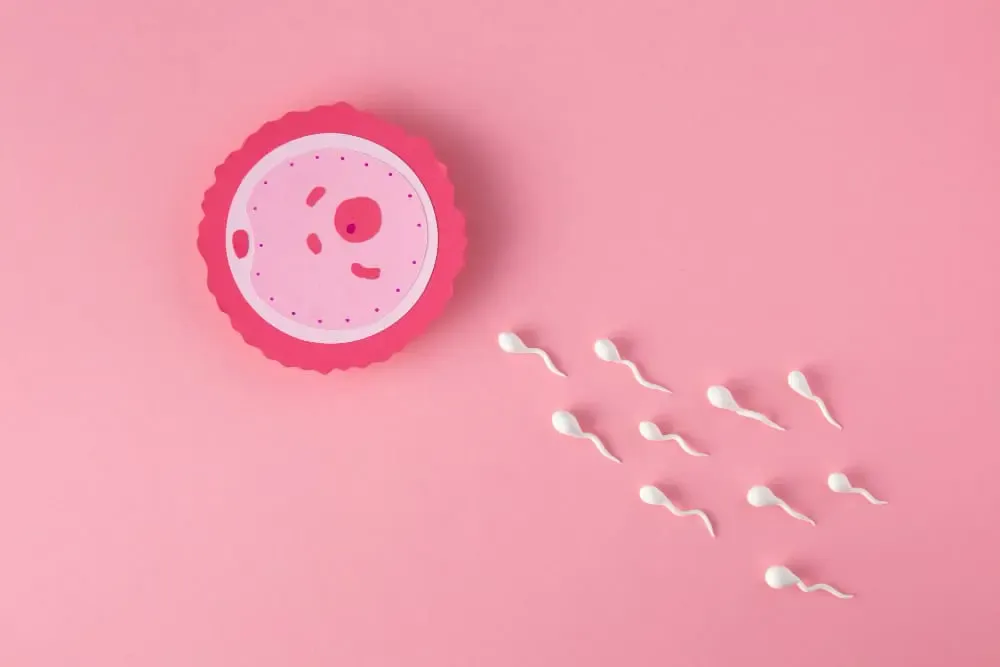
Fertile days are the part of your menstrual cycle when the chance of becoming pregnant is highest. This window covers roughly the five days before ovulation, the day of ovulation itself and sometimes the day after, for a total of about six or seven days. Two biological facts explain it. Sperm can survive inside the female reproductive tract for up to five days, while the egg can only be fertilised for about 24 hours after it is released. If sperm are already present when the egg appears, fertilisation can happen right at ovulation, which is why the days leading up to it matter so much.
Understanding your menstrual cycle
Ovulation is the moment the ovary releases a mature egg that a sperm can fertilise, and it is the centre of the whole cycle. To find your fertile days, it helps to recognise the four phases of a typical cycle. The menstrual phase, usually days 1 to 5, begins with the period as the uterine lining is shed. The follicular phase, roughly days 6 to 14, is when the body matures follicles in the ovaries in preparation for ovulation. Ovulation itself happens around day 14 in a 28-day cycle and is the most fertile moment. The luteal phase, days 15 to 28, is when the body prepares for a possible pregnancy; if fertilisation does not occur, the cycle starts again. These timings are averages, and tracking them over time is part of any thorough gynecological evaluation.
How long does ovulation last?
The release of the egg lasts only about 12 to 24 hours, but the fertile window is broader because sperm can live up to five days in the reproductive tract. Several signs can tell you that you are approaching or in your fertile days: cervical mucus that turns clear and stretchy like raw egg white, a small rise in basal body temperature of roughly 0.3 to 0.6 degrees Celsius after ovulation, mild lower abdominal discomfort or cramps in some women, and a noticeable increase in sexual desire driven by rising estrogen. Reading these signs together is far more reliable than relying on the calendar alone.
How does ovulation occur?
Ovulation is triggered by a surge in luteinising hormone, or LH, which prompts the ovary to release a mature egg. The egg then travels down the fallopian tube, where it may meet a sperm and be fertilised. It is worth remembering that only about one in ten women ovulate exactly on day 14, so understanding your own pattern matters far more than following a textbook average.
How do I know which are my fertile days?
Your fertile days run from about three to five days before ovulation to one or two days after, because sperm survive up to five days while the egg lasts around 24 hours. The exact dates shift with the length of your cycle. In a 26-day cycle ovulation falls near day 12, so the fertile days are roughly days 8 to 13. In a 28-day cycle ovulation is near day 14, giving fertile days of about days 10 to 15. In a 30-day cycle ovulation sits around day 16 with fertile days near days 12 to 17, and in a 32-day cycle ovulation is around day 18 with fertile days of about days 14 to 19. Mapping your own cycle length onto this pattern gives you a personalised estimate.
How can I calculate my fertile and infertile days?
The calculation is straightforward once you have some data. Start by tracking the length of your menstrual cycle for several months so you know your average. Then subtract 14 days from the end of your cycle to estimate your ovulation day, since the luteal phase is fairly constant at about two weeks. Finally, add the days before and the day or two after that ovulation point to mark out your full fertile window; the remaining days of the cycle are your relatively infertile days. An ovulation calculator can give you a quick first estimate, while daily tracking of basal body temperature and cervical mucus makes the result more precise. Many people find that a menstrual tracking app helps them visualise the data and spot their pattern over several cycles. Tracking your cycle this way is also a simple form of preventive health, since it can surface irregularities early.
When you are actively trying to conceive, understanding the cycle connects to other reproductive topics too, from the chromosomal factors explained in our guide on aneuploidy to family-building options such as surrogacy when carrying a pregnancy is not possible.
Three reliable ways to track ovulation and your fertile days
Observing your cervical mucus is the first method. As ovulation approaches, the mucus becomes clear, stretchy and slippery, much like raw egg white, which is a strong sign of peak fertility. The second method is measuring your basal body temperature, taken every morning before you get up; a slight rise of about 0.2 to 0.5 degrees Celsius confirms that ovulation has already happened. The third method is using ovulation tests, or OPKs, which detect the LH surge that occurs roughly 24 to 36 hours before the egg is released. For the most accurate picture, combine two or more of these methods rather than relying on any single one.
Fertile days with irregular cycles or PCOS
If your cycles are irregular or you have polycystic ovary syndrome, predicting ovulation is harder but still possible. Ovulation tests that detect the LH rise, careful basal temperature monitoring and tracking changes in cervical mucus all become especially valuable, because the calendar method alone is unreliable in these cases. Irregular cycles can also be a sign worth investigating, since hormone imbalances and ovarian conditions often sit behind them. A specialist gynecological assessment can run the right tests, and where a male factor is involved a male fertility evaluation rounds out the picture so you can find your fertile window with more certainty.
Why keep a menstrual or fertility calendar?
Keeping a record of your cycle helps you understand your body whether you are trying to get pregnant or to avoid it. A calendar lets you predict ovulation and menstruation more accurately, track symptoms such as cramps or mood changes, and notice abnormal patterns early so you can raise them with a doctor. When natural tracking is not enough, assisted options such as those explained in our overview of in vitro fertilisation or medication protocols like clomiphene can support conception. If you are planning to travel for treatment, you can read more about our specialised medical care in Medellín before you book.
Need medical guidance?
If you have been tracking your fertile days without the result you hoped for, or your cycles make calculation difficult, a specialist can help. Our fertility and gynecology team in Medellín reviews your cycle, runs the appropriate tests and explains your options clearly. Reach out through our fertility specialists in Medellín or our gynecology service to plan your next step with support.