
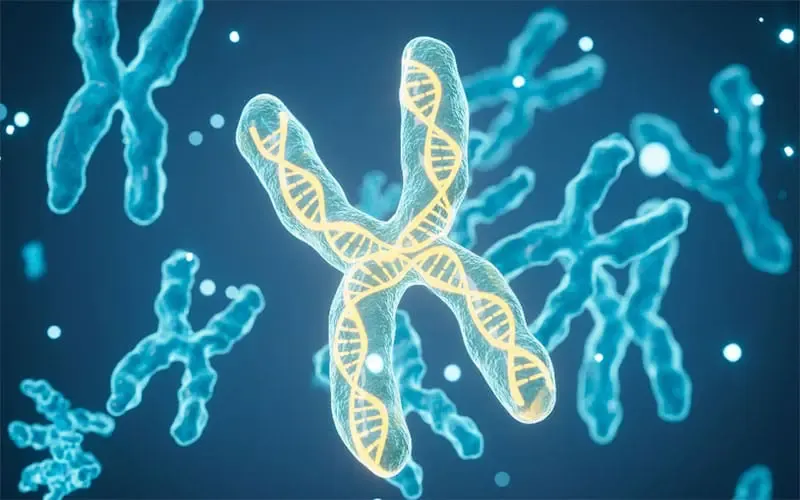
Aneuploidy is one of the most common reasons a pregnancy does not progress as expected, and it is a frequent topic in any conversation about fertility and reproductive planning. If you have been told that an embryo or a fetus carries an abnormal number of chromosomes, understanding what that means helps you weigh your options with a clearer head. This guide explains the meaning of aneuploidy, why it happens, the main types and examples in humans, how it is diagnosed and what treatment paths exist. For personalised guidance you can always reach out through our fertility program in Medellín, where a specialist reviews your case in detail.
Aneuploidy meaning and definition
Aneuploidy refers to the presence of an abnormal number of chromosomes in a cell. A typical human being has 46 chromosomes arranged in 23 pairs. In aneuploidy that count is altered, so the cell ends up with one or more chromosomes too many or too few. This imbalance changes the genetic instructions a cell receives and can affect how an embryo develops, which is why it sits at the centre of so many fertility evaluations.
Difference between aneuploid and euploid
The word aneuploid describes a cell that does not carry the correct number of chromosomes, for example one with 45 or 47 instead of the usual 46. A euploid cell, by contrast, has the exact chromosome count expected for the species, meaning 46 in humans. In assisted reproduction, embryos that test as euploid are generally the ones selected for transfer because they carry the standard genetic load.
Types of aneuploidy
Aneuploidies take different forms depending on how many chromosomes are involved and which ones. The two most common categories are monosomies and trisomies, and almost every well-known example in humans falls into one of these two groups.
Monosomies and trisomies
A monosomy occurs when one chromosome is missing from its usual pair, so the cell has only 45 chromosomes. A trisomy is the opposite situation, where an extra chromosome is added to a pair and the cell carries 47 instead of 46. Both alterations change the dosage of the genes located on the affected chromosome, and that change is what gives rise to the medical conditions associated with aneuploidy.
Examples of aneuploidy in humans
The clearest examples of aneuploidy in humans are the trisomy and monosomy syndromes. Trisomy 21, known as Down syndrome, is the most frequent aneuploidy and happens when there is an additional copy of chromosome 21; it is linked with developmental delays and a range of medical features. Trisomy 18, or Edwards syndrome, involves an extra copy of chromosome 18 and is associated with multiple malformations and a limited life expectancy. Monosomy X, or Turner syndrome, affects girls who carry a single X chromosome instead of two, which can lead to short stature, certain health concerns and challenges with fertility later in life. These named syndromes are the examples most people search for when they look up aneuploidy diseases and disorders.
Causes of aneuploidy
Aneuploidy generally arises from errors during cell division. Most of these errors trace back to meiosis, the specialised division that produces eggs and sperm, although mistakes can also happen in the early divisions of an embryo.
Errors in cell division and meiosis
During meiosis the chromosome pairs are meant to separate evenly so that each egg or sperm receives one copy of every chromosome. When that separation fails, a phenomenon called nondisjunction, the resulting gamete ends up with an extra or a missing chromosome. If that gamete takes part in fertilisation, the embryo inherits the imbalance from its first cell. This is one reason male and female reproductive health both matter, and why a full evaluation may include a male fertility assessment alongside the female workup.
Genetic and environmental risk factors
Advanced maternal age is the single most important risk factor for aneuploidy, because the machinery that separates chromosomes becomes less reliable as a woman ages and her eggs grow older. Beyond age, certain genetic predispositions and some environmental exposures can raise the chance that these division errors occur. Understanding your own risk profile is part of any thorough reproductive consultation.
Diagnosis of aneuploidy
Aneuploidy can be identified both before and after birth using several well-established techniques. The right test depends on your situation, your stage of pregnancy and the questions you and your medical team are trying to answer.
Influence of maternal age and other factors
Women over the age of 35 face a higher likelihood of carrying a pregnancy affected by aneuploidy, largely because of egg ageing. Family history and previous pregnancy losses also influence the probability, which is why these details are reviewed carefully during a preventive health evaluation before or during conception planning. Knowing your fertile window can also help you time conception, and you can learn more in our guide on calculating fertile and infertile days.
Prenatal detection methods
Several prenatal tests can detect aneuploidy during pregnancy. Amniocentesis involves taking a small sample of amniotic fluid to examine the chromosomes of the fetus, while chorionic villus sampling analyses a sample of placental tissue to study fetal DNA. Non-invasive screening of fetal DNA in the mother's blood is often used first to estimate risk before any invasive test is considered.
Postnatal genetic analysis
When aneuploidy is suspected after birth, a postnatal genetic study using a blood sample can confirm whether a chromosomal alteration is present and identify exactly which chromosome is involved. Genetic testing like this is one of several medical exams that doctors rely on to reach a precise diagnosis and plan the right care.
Treatment options for aneuploidy
There is no single treatment that reverses aneuploidy, because the chromosome count of a cell cannot be changed after the fact. Care therefore focuses on the specific condition and its severity. For some syndromes the priority is symptom management and coordinated specialist support, while for others, such as Turner syndrome, hormonal therapies can meaningfully improve growth and quality of life. For couples planning a pregnancy, preimplantation genetic testing carried out within an in vitro fertilisation cycle allows embryos to be screened for the correct chromosome number before transfer, which is the most direct way to reduce the chance of an aneuploid pregnancy.
Implications and risks of aneuploidy
Aneuploidy carries real consequences for both the pregnancy and the people involved, and being aware of them helps families prepare and make informed decisions with their medical team.
Impact on pregnancy and development
Many aneuploidies are not compatible with life and end in early miscarriage, which is why chromosomal abnormalities are a leading cause of pregnancy loss. When a pregnancy does continue, the fetus may face cardiac defects, growth restriction and neurological concerns, so monitoring tends to be closer than usual. If you have experienced recurrent losses, a focused reproductive consultation can help establish whether aneuploidy or another factor is involved.
Health risks for the fetus and the mother
For the fetus, the risks range from structural malformations to delays in physical and mental development, depending on the chromosome affected. For the mother, a pregnancy involving aneuploidy may call for more rigorous medical surveillance and a clear plan agreed in advance with her care team. Open communication with specialists makes these pregnancies safer to manage.
Notable cases and family support
Some aneuploidies have a profound social as well as medical dimension. Down syndrome, or trisomy 21, has been studied extensively, and with the right support people living with the condition lead full and active lives. Families navigating any diagnosis of aneuploidy often need both emotional and practical support, and there are genuine ethical questions tied to prenatal diagnosis that deserve careful, unhurried conversation. Couples who travel for treatment can find this coordinated support through our specialised medical care in Medellín, and may also want to read about surrogate pregnancy as one of the paths available when carrying a pregnancy is not possible. Medication protocols such as those described in our overview of clomiphene are sometimes part of the wider fertility plan as well.
Need medical guidance?
If aneuploidy is part of your fertility story, you do not have to interpret the results alone. Our team of fertility and reproductive specialists in Medellín reviews each case individually and explains your options in plain language, from genetic testing to assisted reproduction. Reach out through our fertility specialists in Medellín and book a consultation to discuss the safest path for your family.