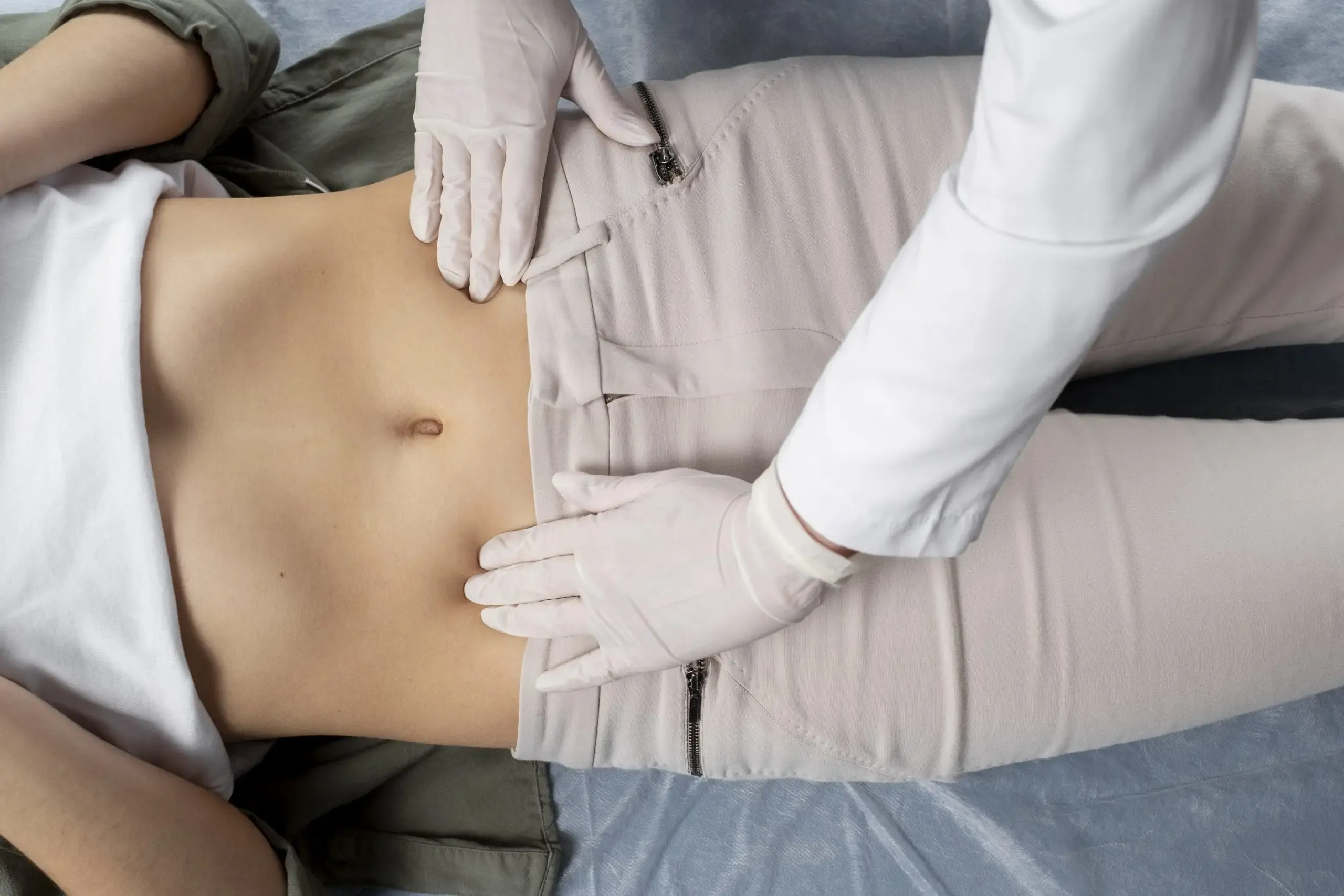

Hemorrhoids are more common than you think, but many people feel uncomfortable or embarrassed talking about the topic. As a result, they may delay seeking medical care, which affects their quality of life.
If you are going through this situation, you are not alone. At MDE Care we explain which specialist treats hemorrhoids, what symptoms to watch for, how to prevent them, and why it is important to act in time.
What are hemorrhoids?
Hemorrhoids are dilated or inflamed veins in the anal canal or rectum. Although everyone has them naturally, they become a problem when they become inflamed, increase in size, or cause symptoms such as:
- Bleeding during bowel movements, usually bright red in color.
- Anal pain or burning.
- Sensation of pressure or a foreign body.
- Lumps or swelling around the anus.
Hemorrhoids can be classified according to where they appear in the anus and the difficulties they present for the patient. Based on their location, they can be:
- Internal: They develop inside the rectum. They generally do not cause pain, but they can bleed.
- External: They are located under the skin surrounding the anus. They can be painful, especially if a clot forms (thrombosis).
And according to their severity:
- Grade I: they do not protrude, but they may bleed.
- Grade II: they come out during bowel movements, but return on their own.
- Grade III: they must be manually reinserted.
- Grade IV: they remain outside permanently.
Which specialist treats hemorrhoids?
Seeing a specialist is a great step for those who feel embarrassed about their symptoms. Medical care can begin with a general practitioner, who can refer you to the appropriate professionals depending on the case, such as a colorectal surgeon or a gastroenterologist:
Colorectal Surgeon
This specialist treats diseases of the colon, rectum, and anus. They are trained to perform medical and surgical procedures depending on the case.
Gastroenterologist:
If the symptoms are related to the digestive system or additional studies are required, they may participate in the diagnosis and comprehensive management.
Why do hemorrhoids occur?
Some of the most common reasons hemorrhoids develop include:
- Chronic constipation and straining during bowel movements.
- Sitting for long periods of time, especially on the toilet.
- A diet low in fiber or fluids.
- Pregnancy (due to increased pelvic pressure).
- Obesity or overweight.
- Activities that increase abdominal pressure.
- Family history
When should you see a specialist?
The sooner you are evaluated, the simpler the treatment will be and the lower the risk of complications. So, if you experience the following symptoms, do not hesitate to see a specialist:
- Recurrent bleeding during bowel movements
- Persistent pain or anal burning
- Inflammation or lumps near the anus
- Discomfort that affects your daily routine
- Symptoms that do not improve with other treatments
What happens if they are not treated in time?
Ignoring hemorrhoids can lead to more serious problems in the future:
- Hemorrhoidal thrombosis: intense pain due to blood clot formation.
- Prolapse: external hemorrhoids that do not retract.
- Anemia: due to frequent bleeding.
- Anal fissures or infections.
- Delayed diagnosis of more serious conditions, such as colorectal cancer.
Treatment options for hemorrhoids
Type of treatment
What does it consist of?
When is it recommended?
Conservative treatment (non-invasive)
- High-fiber diet (fruits, vegetables, legumes, whole grains).- Water intake (minimum 1.5 L per day).
- Sitz baths with warm water.
- Anti-inflammatory creams or suppositories.
- Regular physical activity.
- Avoiding excessive straining in the bathroom.
For mild or moderate cases. First line of management.
Outpatient procedures (non-surgical)
- Rubber band ligation: cuts off the blood flow to the hemorrhoid.
- Sclerotherapy: injection that reduces inflamed tissue.
- Infrared photocoagulation or laser: cauterizes the affected tissue.
For internal hemorrhoids grades I to III. Short recovery time required.
Surgical treatment
- Hemorrhoidectomy: complete removal of hemorrhoidal tissue.
- Hemorrhoidopexy (PPH): repositions internal hemorrhoids without removing them.
For severe cases or those that do not respond to other treatments. Performed after medical evaluation.
How to prevent hemorrhoids?
Hemorrhoids are more common than they seem,
- Increase your fiber intake
- Drink between 1.5 and 2 liters of water per day
- Avoid straining during bowel movements
- Exercise moderately
- Do not spend too much time in the bathroom
- Go to the bathroom as soon as you feel the urge
- Avoid excessive use of laxatives
From what age should I have preventive checkups?
Starting at age 45, an evaluation with a colorectal surgeon is recommended, especially if there is a family history of colorectal diseases. If you experience symptoms before that age, the ideal is to seek consultation without delay.
What to expect at a consultation with a colorectal surgeon?
At MDE Care, the consultation takes place in a professional, safe, and respectful environment. During the appointment:
- Your medical history is reviewed.
- A physical examination of the anal and rectal area is performed.
- Tests such as anoscopy, rectoscopy, or colonoscopy may be requested, depending on the case.
The goal is to identify the type of hemorrhoids, rule out other causes, and offer you the most appropriate treatment.
What other conditions can be confused with hemorrhoids?
Some conditions that can cause similar symptoms are:
- Anal fistulas
- Perianal abscesses
- Rectal polyps
- Inflammatory bowel disease (such as ulcerative colitis or Crohn's disease)
- Colorectal cancer
That is why it is essential not to self-diagnose and to see a specialist if there is bleeding, persistent pain, or changes in bowel movements.
Take care of your well-being from the first symptom
Hemorrhoids are a common condition that, if detected early, can be treated effectively and with minimal interventions. Ignoring them only increases the risk of complications that affect your quality of life.
At MDE Care, we combine clinical expertise, precision technology, and an approach centered on the comprehensive well-being of each patient. Our colorectal surgery team is prepared to offer you clear, respectful care aligned with your needs. If you have noticed discomfort or want to resolve your questions with a specialist, schedule your appointment. We are here to help you regain your comfort and confidence, step by step.