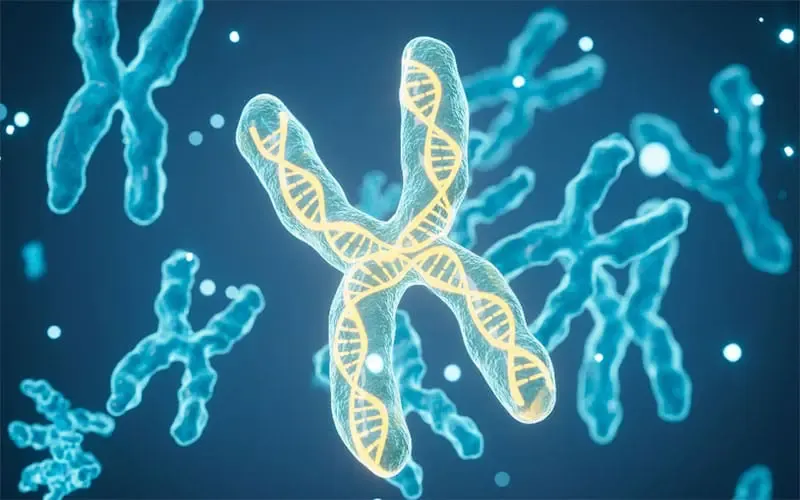
The Turner syndrome is a genetic condition exclusive to females, characterized by the total or partial absence of one of the two X chromosomes. This condition can significantly impact growth, sexual development, and overall health. Below, we offer a comprehensive guide covering the causes, symptoms, diagnosis, and treatments of Turner syndrome.
What is Turner syndrome?
Turner syndrome is a genetic disorder in which females lack part or all of one X chromosome. This can present in different forms, such as the complete absence of a chromosome (45, X) or partial abnormalities. Approximately 1 in every 2,500 girls is born with this syndrome, and its severity can vary depending on the genetic alteration.
YearMilestone in the Understanding of Turner Syndrome
1938
Henry Turner describes for the first time a group of women with common characteristics.
1959
It is discovered that the cause is the absence of a sex chromosome (X).
1970s-80s
Treatments with growth hormones are developed.
2000s
Advances in assisted fertilization allow some women with Turner syndrome to have children.
Characteristics of Turner Syndrome
Women with Turner syndrome may present a series of physical characteristics and health problems. Some of the most common characteristics include short stature, a wide or webbed neck, and cardiac abnormalities. Symptoms vary from person to person, which can make early diagnosis difficult in some cases.
Life StageCommon Characteristics
Prenatal
- Low amniotic fluid
- Wide or swollen neck on ultrasounds
Childhood
- Short stature
- Wide or webbed neck
- Swelling of hands and feet
- Cardiac malformations
Adolescence
- Absence of menstruation
- Lack of breast development
- Infertility
Adulthood
- Osteoporosis
- Persistent infertility
- Hypertension
- Possible cardiac problems
Main Causes of the Syndrome
The Turner syndrome occurs due to the complete or partial loss of one of the X chromosomes in females. This happens randomly during cell division and, in most cases, is not related to hereditary factors. The error in cell division can occur in the egg or the sperm, before conception.
We care for your health
Find trusted specialists in Medellín to improve your well-being.
Turner syndrome and pregnancy (discussing fertility in women with the syndrome)
One of the greatest challenges for women with Turner syndrome is fertility. Due to ovarian dysfunction, most women with this condition are infertile. However, thanks to assisted fertilization, some women have been able to have children through egg donation. Pregnancy in these women requires rigorous medical monitoring due to the associated risks, such as cardiac problems.
What are the main symptoms and signs of Turner syndrome?
Before birth
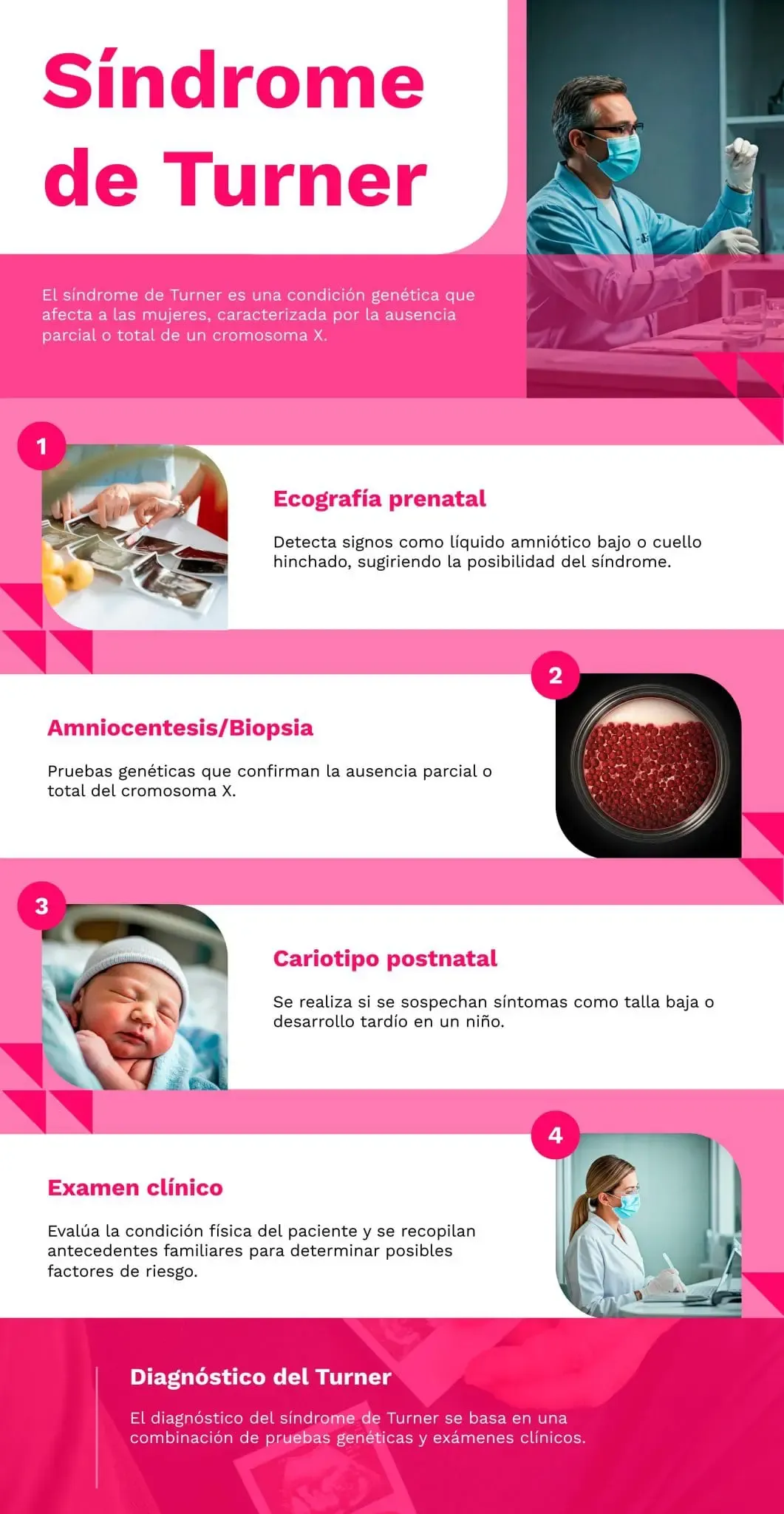
Turner syndrome can be detected before birth through prenatal genetic testing, such as amniocentesis. Some signs observed on ultrasounds include excess fluid around the neck or low amniotic fluid levels.
During childhood
In infancy, the most common signs include short stature, a wide or webbed neck, and, in some cases, swelling of the hands and feet at birth. Cardiac problems may also appear, such as coarctation of the aorta.
Adolescence and adulthood
In adolescence, symptoms become more apparent. Girls with Turner syndrome typically do not experience puberty naturally, which involves the absence of menstruation and limited breast development. In adulthood, infertility is common and women also face a higher risk of osteoporosis and high blood pressure.
How can Turner syndrome be identified in girls?
- Below-average height.
- Swelling of the hands and feet at birth.
- Wide or webbed neck.
- Absence of menstruation in adolescence.
- Lack of breast development.
- Cardiac abnormalities.
How is the diagnosis made?
The diagnosis of Turner syndrome is confirmed through a karyotype, which is a chromosomal analysis. This test allows for the detection of the partial or total absence of the X chromosome. It can also be performed before birth with an amniocentesis, or after birth if characteristic symptoms are observed, such as short stature or delayed sexual development.
Common treatments for Turner syndrome
Although there is no cure for Turner syndrome, several treatments can improve the quality of life of women who have it. These treatments include:
- Growth hormone therapy:Helps increase height during childhood.
- Hormone replacement therapy: Used to induce puberty and maintain estrogen levels, which is crucial for bone and cardiovascular health.
- Medical monitoring:Regular heart and kidney check-ups to prevent complications.
Tips for caring for a girl with Turner syndrome
- Regular heart check-ups:This is crucial due to possible cardiac malformations.
- Regular exercise:Helps maintain bone and cardiovascular health.
- Diet rich in calcium and vitamin D: To prevent osteoporosis.
- Emotional support:During adolescence, as delayed development can cause anxiety.
Possible complications
The most common complications include:
- Heart disease such as coarctation of the aorta.
- Kidney problems that require monitoring.
- Osteoporosis due to the lack of estrogen.
- Hypertension and autoimmune problems, such as thyroiditis.
Your peace of mind is our priority
We are equipped to treat genetic conditions such as Turner syndrome
Is Turner syndrome hereditary?
Turner syndrome is not hereditary in the majority of cases. It occurs randomly due to an error in cell division during the formation of the egg or sperm. It is very rare for a parent to pass this condition on to their daughter.
Can women with Turner syndrome become pregnant naturally?
Natural fertility is rare in women with Turner syndrome due to ovarian dysfunction. However, some have become pregnant naturally, although the risks for the mother and baby are elevated. Assisted fertilization techniques, such as egg donation, are the most common option for women with this condition who wish to have children.